Comparison
Retinol for Beginners: A UK Comparison Guide
Compare three retinol serum formats for UK shoppers, including low strength retinol in squalane, retinol blends and pharmacy brand retinol options. Use this page to compare strength, supporting ingredients, routine fit and label guidance before checking the latest product details.
- Low strength retinol in squalane: The Ordinary Retinol 0.2% in Squalane
- Retinol blend: The INKEY List Retinol Serum
- Pharmacy brand option: La Roche-Posay Retinol B3 Serum
Should a beginner compare 0.2% or 0.5% retinol?
A 0.2% and a 0.5% retinol product differ mainly in listed concentration, but percentage alone does not tell you how a formula will feel on your skin. If you are new to retinol, a lower listed strength is one common comparison starting point, while a 0.5% option may be more relevant when you already know how your skin responds to a retinol routine.
Check the product label and brand guidance for frequency and application. If you want to compare more strengths and formulations side by side, see our Best Retinol Serums UK guide.
Products to Compare
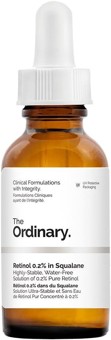
The Ordinary Retinol 0.2% in Squalane
Check latest details on Amazon UK
The Ordinary Retinol 0.2% in Squalane is a lower-strength retinol option within The Ordinary range. The squalane base may feel less drying for some skin types, as squalane is commonly used as a lightweight emollient in skincare formulas. Check the product label before using, particularly if new to retinol or with reactive skin.
Compare for: a lower-strength retinol in a squalane base. Skip if: you prefer a higher-strength retinol or a formula with additional supporting actives.
Check latest details on Amazon UK
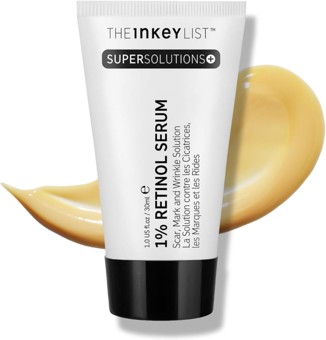
The INKEY List Retinol Serum combines RetiStar stabilised retinol with Granactive Retinoid in a fragrance free formula. Squalane is included in the base. The product page labels this alongside skin feel and texture concerns. Check the product label before using, particularly if new to retinol or with reactive skin.
Compare for: a retinol serum with a stabilised retinol and Granactive Retinoid blend. Skip if: you prefer a straightforward single-active retinol or a pharmacy brand formulation.
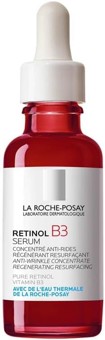
La Roche-Posay Retinol B3 Serum
Check latest details on Amazon UK
La Roche-Posay is a pharmacy skincare brand commonly discussed in UK routines. The Retinol B3 Serum combines pure retinol with niacinamide and hyaluronic acid in a fragrance free formula. The product page labels this alongside uneven-looking tone and sensitive-feeling skin positioning. Check the product label before using, particularly if new to retinol or with reactive skin.
Compare for: a pharmacy brand retinol serum with niacinamide and hyaluronic acid. Skip if: you prefer a straightforward single-active retinol or a budget brand formulation.
Comparison
| Product | Format | Key label detail | Compare for | Check |
|---|---|---|---|---|
| The Ordinary Retinol 0.2% in Squalane | Retinol serum, 30ml | 0.2% retinol in squalane base | A lower-strength retinol in a squalane base | Check latest details on Amazon UK |
| The INKEY List Retinol Serum | Retinol serum, 30ml | 1% RetiStar retinol + 0.5% Granactive Retinoid, fragrance free | A stabilised retinol with Granactive Retinoid blend | Check latest details on Amazon UK |
| La Roche-Posay Retinol B3 Serum | Retinol serum, 30ml | Pure retinol + niacinamide + hyaluronic acid, fragrance free | A pharmacy brand retinol with niacinamide and hyaluronic acid | Check latest details on Amazon UK |
Retinol sits within a wider group of ingredients used for specific routine goals. Our skincare actives explainer puts retinoids, exfoliating acids, vitamin C, niacinamide and other common actives in context. For full formula reading, see how to read a skincare ingredients list.
What Retinol Products Are
Retinol is a form of vitamin A commonly compared in skincare routines. Over-the-counter retinol products are distinct from prescription retinoids in how they convert on the skin, which some shoppers factor in when comparing options. Our bakuchiol comparison explains how a non retinoid option differs.
Retinol products are commonly compared for texture, concentration, and supporting ingredient profile. Lower-strength retinol options are frequently chosen by people newer to this category. The routine placement of a retinol product depends on the specific product instructions and how the formula is positioned by the brand.
Strength and Formula Notes
Retinol concentration: lower-strength retinol is commonly compared by people newer to this category. Concentrations of 0.25% and below are frequently discussed in this context. Some products use a single retinol concentration; others combine retinol with retinoid esters such as Granactive Retinoid, which some shoppers compare alongside conventional retinol when comparing formula depth.
Formula base: retinol in squalane uses an oil base that may feel less drying for some skin types. Water-based serums tend to have a lighter texture. Comparing formula base alongside concentration is one comparison approach.
Supporting ingredients: some retinol products include supporting actives such as niacinamide, hyaluronic acid or squalane. These additions affect how the formula is positioned and may be relevant when comparing whether a product overlaps with an existing step in the routine.
How to Compare Before Buying
Strength and concentration: comparing retinol concentration on the product label is one starting point. Lower-strength options are commonly compared by people newer to retinol. Check the product label for the specific retinol concentration.
Formula type: some retinol products use a single active concentration. Others combine retinol with retinoid esters for a broader formula approach. Comparing formula type alongside concentration is one comparison approach.
Supporting ingredients: check what else is in the formula alongside retinol. Niacinamide, hyaluronic acid and squalane appear across different retinol products. These additions affect how the product is positioned and whether it would overlap with an ingredient already in the routine.
Routine fit: retinol placement and frequency depend on the product, formula and skin tolerance. Check the product label and brand guidance before combining with other actives. Some shoppers compare retinol alongside moisturiser or hyaluronic acid products. Compare routine fit before buying.
Routine Fit and Tolerance Notes
Skin type considerations: retinol products are commonly discussed across a range of skin types. Some formulas may not be right for everyone. Check the full ingredient list before buying, particularly for products with supporting actives alongside retinol.
Combining with other products: if the routine already includes other actives, compare whether a new retinol product would overlap with an existing step before buying. Routine placement depends on product instructions. Some shoppers compare retinol alongside moisturiser or hyaluronic acid products.
Signs of a mismatch: if a product feels uncomfortable, overly drying or inconsistent with how the skin normally responds, the formula may not be right for that routine. Choosing a lower-strength option is one comparison route some shoppers consider.
Sun protection: some people find their skin more sensitive to UV radiation when using retinol. Many shoppers use a broad-spectrum SPF during the day as part of their routine, regardless of weather. Check the product label and brand guidance.
Before You Buy
The Ordinary Retinol 0.2% in Squalane is a lower-strength retinol in a squalane base. The INKEY List Retinol Serum combines stabilised retinol with Granactive Retinoid in a fragrance free formula. La Roche-Posay Retinol B3 Serum pairs pure retinol with niacinamide and hyaluronic acid in a pharmacy brand format.
Compare concentration, supporting ingredients and formula base before choosing. Check the current listing details for the full ingredient list, application guidance and any specific warnings. Formula versions can change, so check the label on the product you receive before use.
Frequently Asked Questions
How do beginners compare retinol products?
Lower-strength retinol options are commonly compared by people newer to this category. Retinol placement and frequency depend on the product, strength and skin tolerance. Some shoppers compare lower-strength options first. Check the product label and brand guidance before using.
How do shoppers compare retinol with other actives?
Some shoppers compare retinol with exfoliating acids or vitamin C on different evenings of the week. Retinol placement depends on the product, formula and skin tolerance. Check brand guidance if unsure how a specific product fits alongside other actives.
How do beginners compare retinol strength?
Lower-strength retinol is commonly compared as a starting point. Concentrations of 0.25% and below are frequently discussed in this context. Some products combine retinol with retinoid esters, which some shoppers compare alongside conventional retinol when comparing formula depth. Check the product label for the specific retinol concentration.
Can I use retinol while pregnant or breastfeeding?
Retinoids are generally avoided during pregnancy and breastfeeding unless advised by a qualified professional. If you are pregnant, breastfeeding, trying to conceive, using prescription skincare, or managing a diagnosed skin condition, speak with a GP, pharmacist, midwife, dermatologist or qualified prescriber before using retinol or retinoid products.