Educational Resources
Skin Experts and Educators to Consider Following
Skincare is crowded with opinions. Influencers, brands, beauty editors, and wellness accounts all have views on what you should be putting on your face. Separating the useful from the agenda-driven is genuinely difficult when you are starting out. This page is a cautious guide to public skincare educators whose work may be useful for general skincare education. Social media content cannot assess your skin, diagnose conditions or replace advice from a GP, pharmacist, dermatologist or qualified prescriber. Always check credentials and context before relying on any source for skincare information.
What this guide covers
When considering public skincare educators, some useful points to check include: whether they publish in peer-reviewed journals, whether their clinical work is documented, whether they explain their reasoning, and whether they have a track record beyond a social media presence.
Social media followings are not a reliable measure of expertise. A well-produced Instagram grid does not make someone a scientist. What matters is the body of work underneath the profile: the textbooks, the clinical trials, the peer-reviewed papers, and their documented reasoning.
The accounts below are public skincare educators whose published work, clinical documentation and public reasoning some UK shoppers and researchers have found useful for general skincare education. Some are primarily researchers. Some are primarily clinicians. Some do both.
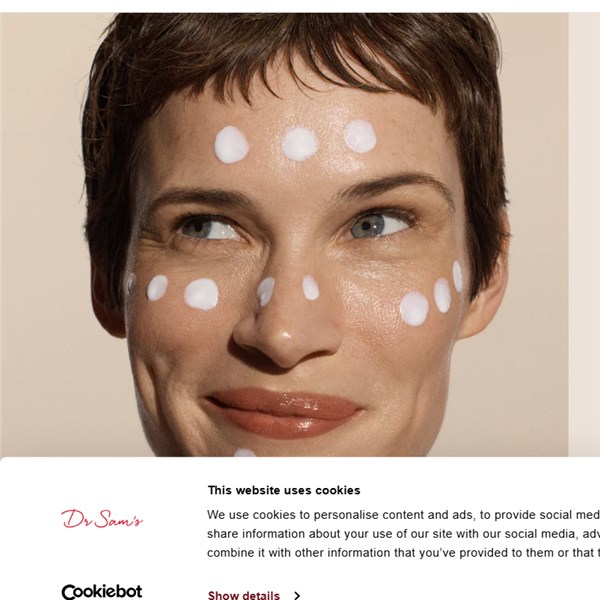
Dr Sam Bunting is a UK-trained medical doctor and cosmetic dermatologist. Trained at Cambridge University and University College London, she became a member of the Royal College of Physicians before pursuing cosmetic dermatology. She runs a Harley Street clinic and publishes on Instagram and YouTube about skincare with an approach rooted in clinical evidence.
Her engagement with the NHS and private practice intersection may be of interest to UK shoppers. She discusses pressures and limitations of both settings in her public content. She often discusses acne, rosacea, melasma and routine building in a practical way.
Her stance on ingredient layering is measured and practical. Rather than maximising the number of actives in a routine, she advocates for a focused approach built around the specific concern you are addressing.

Professor Tony Chu is a UK-based researcher and practitioner in dermatology with a large body of published academic work on acne vulgaris and rosacea. His research spans the epidemiology of acne, its psychological impact, and the evidence base for treatment approaches.
His clinical practice at Hammersmith and Ealing Hospitals covered the full spectrum of acne presentations. He was among the early advocates in the UK for understanding acne as a condition with significant psychological and social dimensions alongside the dermatological one.
His book, The Good Skin Doctor: A Dermatologist's Survival Guide to Acne, is one of the few practitioner-authored books on acne that is accessible to patients without simplifying the underlying science.

Dr Zein Obagi is a Syrian-American dermatologist based in Beverly Hills who has developed clinical approaches to skin health adopted by practitioners worldwide. He has spent over thirty-five years in this field.
His first significant contribution was the Obagi Nu-Derm system, which brought physician-dispensed skincare to a wider clinical audience and established the concept of skin health as a continuous process rather than a cosmetic end state. He subsequently founded ZO Skin Health, which extends his clinical philosophy through a product range with global distribution.
His philosophy distinguishes between skin health and skin aesthetics, arguing that many skincare approaches focus on the surface without addressing underlying cellular processes that determine skin quality over time. Whether or not you use his products, this conceptual framework may be useful context for thinking about how skincare works.

Dr Leslie Baumann is a board-certified dermatologist whose Baumann Skin Typing System classifies skin along four binary dimensions: oily or dry, sensitive or resistant, pigmented or non-pigmented, and wrinkled or tight. This creates sixteen possible skin types, which is a more nuanced approach than many consumer skincare classification systems.
Her textbook, Cosmetic Dermatology: Principles and Practice, is used in dermatology training programmes and is one reference text consulted when evaluating the evidence base for specific ingredients. Her book, The Skin Type Solution, brought the Baumann classification system to a general audience.
How we use expert sources when building this site
When researching a skincare ingredient or writing a buying guide, Skincare Lab UK uses published papers on evidence and safety as reference points. We look at what practitioners say about appropriate concentrations and formulation contexts, and evaluate whether their clinical experience aligns with the evidence from controlled trials.
No single expert has a monopoly on the evidence. What Skincare Lab UK looks for is a consistent pattern between published research and what experienced clinicians observe in practice. When both align, that is treated as a useful reference point for analysis.
Expert profiles on this page are updated as understanding develops. If new practitioners whose work meets the editorial standard are encountered, they may be added. If an expert's public positions shift, that may be noted.
A note on Dr Davin Lim

Dr Davin Lim is a dermatologist who publishes on YouTube about practical skincare topics including laser treatments, acne scarring, and the management of pigmentation. He trained in Ireland and the UK before practising in Australia, with a clinical practice in Brisbane. His YouTube content covers at-home skincare, routine building, and what to expect from clinical treatments.
He is not included in the main profiles above because his primary contribution is procedural and clinical content rather than published in the peer-reviewed literature that is the primary reference standard for this site.
Written by Skincare Lab UK
External expert links (to clinic sites, PubMed, and YouTube channels) are not affiliate links. We only earn a commission if you purchase a book through the Amazon UK links above.
Last reviewed: June 2026